English| EUR
Suggested for you
More currencies
Choose a language
Aruba's calm southern coast offers some of the Caribbean's most forgiving conditions for first-time divers. Warm water averaging 79°F year-round, consistent visibility reaching 100 feet, and shallow reefs starting at 20 feet make the island an ideal training ground for novice scuba enthusiasts.
Quick answer
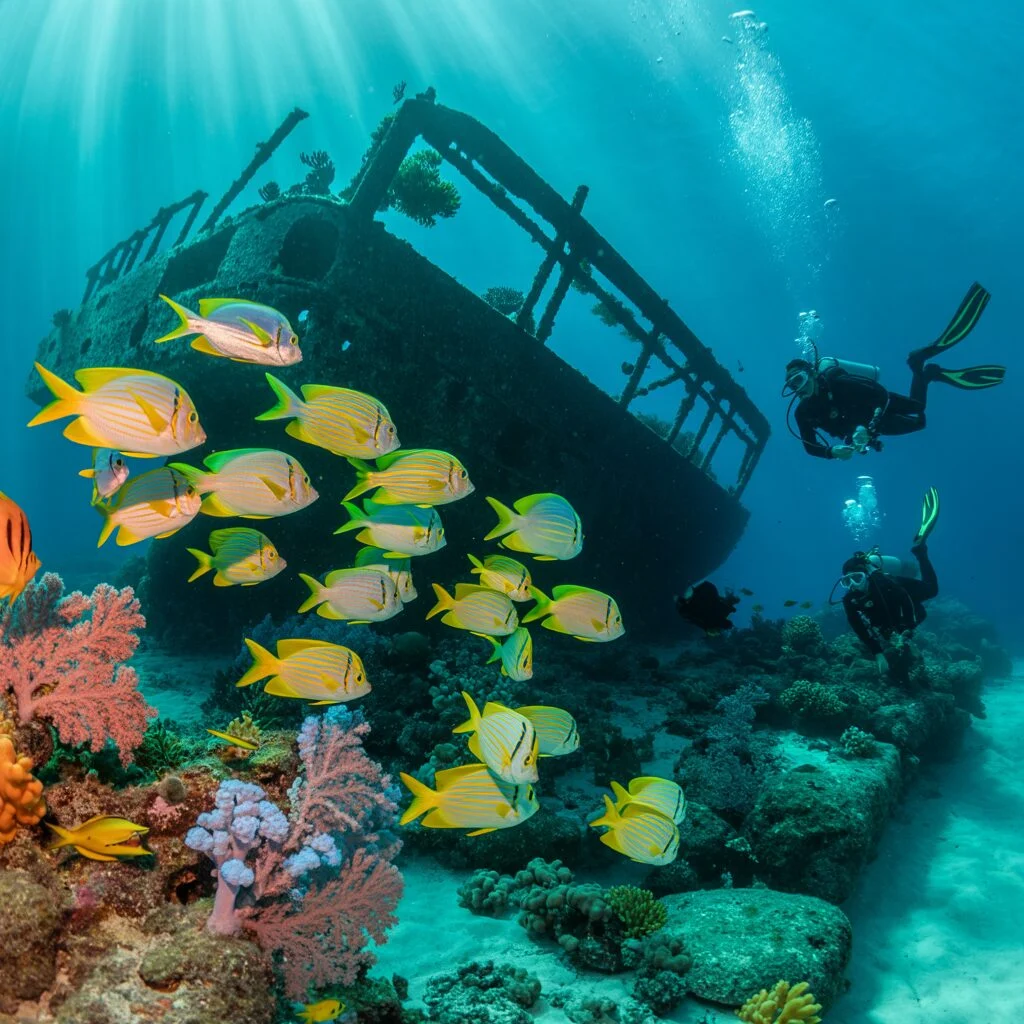
Aruba scuba diving beginners can start with no prior certification through Discover Scuba Diving programs offered by licensed operators in Oranjestad and Noord, with most introductory dives conducted at shallow sites between 20 and 40 feet deep. The island's protected leeward coast provides gentle currents and excellent visibility for learning basic skills, while wreck sites like the Antilla and natural reefs near Malmok Beach accommodate divers completing their PADI Open Water certification. Morning sessions between 8:00 and 10:00 typically offer the calmest sea conditions and clearest water for training dives.
Aruba registers over 15,000 first-time scuba experiences annually, more than half conducted at sites within a ten-minute boat ride from shore. The island's volcanic geology creates a tiered underwater landscape where beginners practice buoyancy control on sandy plateaus at 25 feet before progressing to coral formations and shipwrecks at intermediate depths. Most dive operators structure beginner programs around the PADI curriculum, starting with pool or confined-water training before open-water certification dives. The Discover Scuba Diving option requires no prior experience and includes a brief theory session, shallow-water skills practice, and a guided reef dive to 40 feet maximum depth—the entire program takes four to five hours. Those pursuing full Open Water certification complete four training dives over two to three days, with final sessions often scheduled at the Mangel Halto reef system or the Baby Beach marine reserve where sandy bottoms and minimal current simplify skill demonstration. The southern coastline's protection from trade winds creates year-round dive conditions, though visibility peaks between April and August when plankton levels drop and water clarity extends beyond 80 feet. Operators in Noord focus on northern dive sites like the Antilla wreck and Arashi Reef, while Oranjestad-based services emphasize southern locations including the Tugboat wreck and Barcadera Reef. Water temperature variation remains negligible—a 3mm wetsuit suffices in all seasons, and many beginners dive in rash guards alone during summer months. Certification cards issued in Aruba carry international recognition, allowing newly certified divers to continue their training elsewhere or return for advanced specialties like wreck penetration and deep diving. The island's compact size means every operator reaches the same core beginner sites, so service quality and instructor-to-student ratios matter more than location when selecting a provider. Private operators handle all equipment rental and boat transport, with morning departures structured around the 8:00 to 10:00 window when surface conditions and underwater visibility align for optimal training scenarios.
“The island's volcanic geology creates a tiered underwater landscape where beginners practice buoyancy control on sandy plateaus before progressing to coral formations and shipwrecks.”
The best arrival window for beginner scuba divers is between 08:00–10:00. Morning hours provide the most favorable visibility and calmest sea conditions, which are essential for those learning to dive.
Consistent 82°F (28°C) waters
This period offers calm seas and steady trade winds.
Warm 84°F (29°C) temperatures
These months feature frequent calm surface conditions.
—
The ocean is typically at its calmest, facilitating easier entry for beginners.
Verdict: The optimal time for beginners is mid-April to June or September to November, specifically aiming for the 08:00–10:00 arrival window.
Scuba diving operations for beginners in Aruba are open daily to accommodate training schedules throughout the week.
Starting your scuba diving journey in Aruba requires selecting a certified operator, completing pool-based training, and progressing to shallow open-water dives. The entire process from initial contact to your first guided reef dive typically spans 2-3 days.
Visit dive shops in Oranjestad or Noord during morning hours (08:00–10:00) to compare instructors, class sizes, and training schedules. Many beginners overlook verifying the instructor's active certification status and student-to-instructor ratio.
Fill out the required health declaration before your first session, disclosing any conditions that may affect underwater safety. Withholding information about ear problems or respiratory issues is the most common mistake that leads to aborted dives.
Practice essential skills like regulator clearing, mask removal, and buoyancy control in a pool or shallow beach area under direct supervision. Rushing through equalization technique is the primary reason beginners experience ear discomfort on their first ocean descent.
Apply your training during a guided dive in 5-8 meters of water, where your instructor verifies your readiness for deeper sites. New divers frequently forget to breathe continuously and hold their breath when focused on fish or coral, creating unnecessary risk.
Join guided dives at locations selected for calm conditions and gradual depth profiles, typically departing between 08:00–10:00 when visibility peaks. Touching coral to stabilize yourself damages the reef and is the most frequent error instructors must correct.
There is no entrance fee to access the ocean for scuba diving in Aruba. Costs for beginners are exclusively associated with services provided by private operators.
Verdict: Beginners pay zero for ocean entry, while total costs depend entirely on the specific training and equipment rental packages selected from private dive operators.
Proper preparation ensures a safe and comfortable first dive experience in Aruba's warm Caribbean waters.
Everything you need to know about aruba scuba diving beginners
Yes, the island offers calm waters and numerous operators dedicated to instruction, making it a premier destination for aruba scuba diving beginners. Local dive centers provide tailored experiences to ensure safety and comfort for those new to the underwater world.
The best arrival window is 08:00–10:00, as morning hours typically offer the best visibility and calmest sea conditions for beginners. Planning your dive during these hours helps you avoid afternoon currents and maximize your experience.
There is a 0 USD entrance fee for scuba diving services as they are provided by private operators. While you do not pay an entrance fee to the ocean, you will pay the individual private dive shop for their specific training and gear services.
Most dive operators provide all necessary gear including tanks, regulators, and buoyancy control devices for aruba scuba diving beginners. You should bring personal items like swimwear, a towel, and reef-safe sunscreen to prepare for your day on the water.
Many local operators offer introductory experiences such as Discover Scuba Diving for younger participants who meet specific age and health requirements. It is best to check directly with your chosen dive center regarding their specific age policies and health certifications.
While a full certification is required for independent diving, aruba scuba diving beginners can participate in introductory resort courses without prior certification. These supervised sessions allow you to explore the Caribbean reefs under the direct guidance of a professional instructor.
Best Aruba Scuba Diving Sites
Read more GuideScuba Diving Prices & Packages
Read more Tickets & toursScuba Diving for Non-Certified Divers
Read more Tickets & toursCruise Ship Shore Diving
Read more Tickets & toursPrivate Scuba Diving Tours
Read more Tickets & toursPADI Scuba Certification
Read more Tickets & toursAntilla Shipwreck Dives
Read more